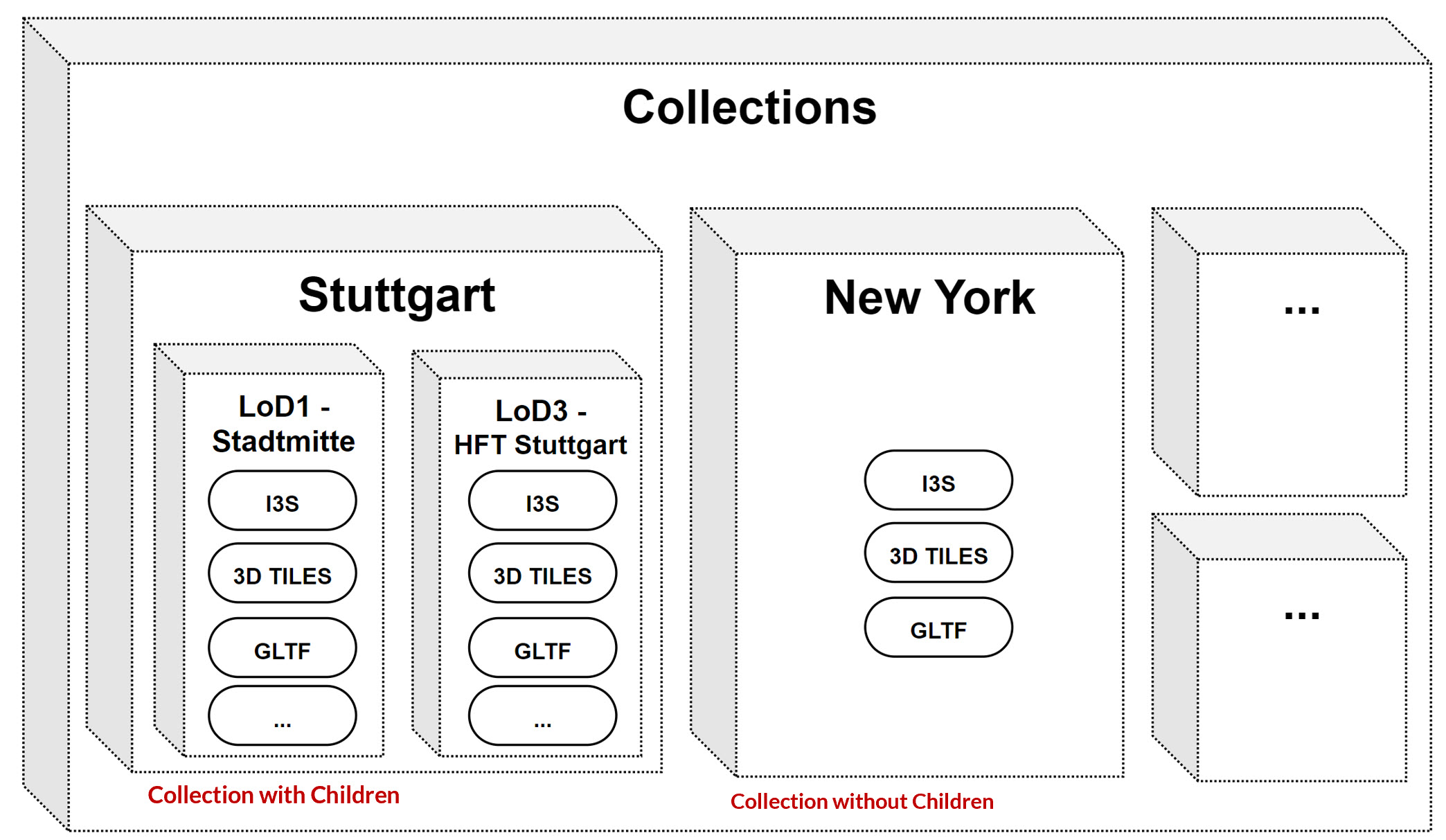
GeoVolumes API is a way to unify access to global 3D model and terrain data across various formats, platforms, and technologies.
Several solutions and standards have emerged in recent years to access and transfer 3D geospatial content over the internet (e.g., 3D Tiles, I3S, OGC 3D Portrayal Service, glTF, CDB, CityGML). These solutions were developed for various technical and commercial reasons. They use different distribution mechanisms and are optimized for user requirements and bandwidth situations. As each of these co-existing solutions binds the user to an approach, it is challenging to access various 3D content from different providers.
3D GeoVolumes seeks to address this challenge by providing a resource model and corresponding API to integrate various approaches into a single, open standards-based solution. The proposed API and resource model will allow efficient discovery and access of 3D content in multiple formats based on a familiar space-centric perspective.
The goal of the Standard is not to replace existing distribution methods and models for 3D content but to enable interoperability between them.

Based on the list of recorded bicycle theft incidents released by the Toronto Police Service from 2014 to 2020, this research tries to determine which areas in Toronto should get special attention in terms of bicycle thefts.

A Norwegian student who went warding around Oslo on a pushbike has discovered that several popular Bluetooth headphones don't implement MAC address randomization, meaning they can be used to track their wearers.
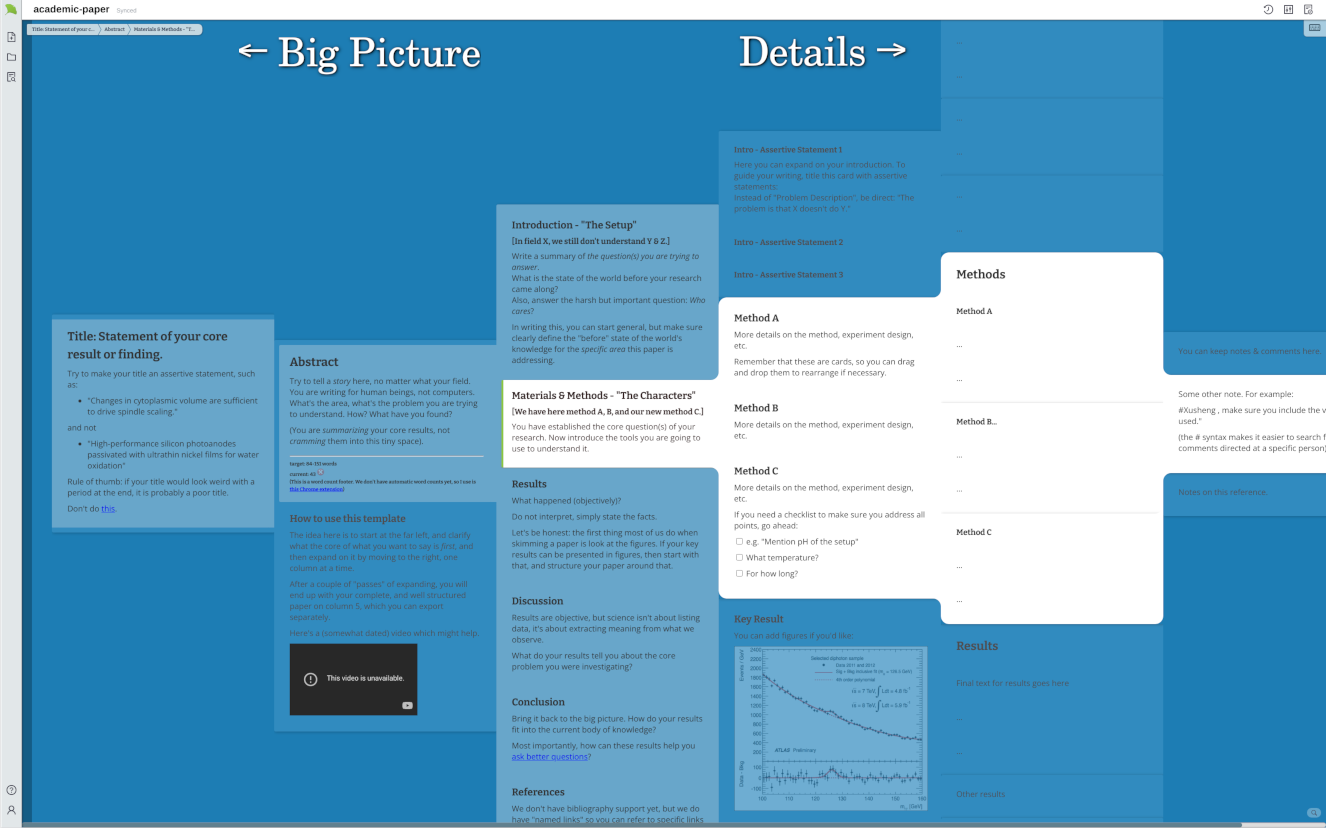
The writing software gets you to the first draft fast. Go from notes→outline→draft in the same simple view. Stop being overwhelmed, and start playing with your words.
Numba is a just-in-time compiler for Python that works best on code that uses NumPy arrays and functions and loops.

Read Aloud is a Chrome and Firefox extension that uses text-to-speech technology to convert webpage text to audio.
An ultra-slim localstorage wrapper with optional support for TTL and encryption

In this blog, the author will show you how to create a machine learning model (in Python) that can learn NBA positions and play styles from only career points scored, assists, rebounds, blocks, and steals.
NFT is a blockchain-based digital asset proof mechanism, which is very popular at present. However, this article discusses some technical details, suggesting that it is technically flawed and may not be appropriate as an asset.
The certificate kept in the blockchain is not the picture, but it's a URL that points to some JSON. The JSON contains the URL that points to the asset. In short, you own an url, not an NFT-verified asset.
However, you don't own any of those two URLs. Instead, they're owned by external parties. So you paid for a link in a domain that you don't own and you can't control.
Either of parties stops owning the domain, your NFT is gone.
Many technical problems ultimately turn out to be people problems, and a lack of good documentation is no exception.
Either there's no documentation at all, or they're messy and scattered in code, word, confluences, etc. The larger the company, the worse the problem.
Writing and maintaining documentation is a habit that needs to be encouraged and nurtured.
This article looks at how Google, Twitter, and Spotify, handled their technical documentation and built a culture of documentation.
The top 3 things we can learn:
- Adopt the docs-as-code approach-Make the engineer's life as easy as possible
- Standardize and invest in your tools and create a documentation template
- Teaching and leading by example
-
Being self-sufficient is not necessarily about being able to build the most whiz-bang application entirely by yourself - collaboration is still crucial for complex systems - but about having enough tools to progress, understand and unblock yourself as needed. --Full Stack or Self-Sufficient?
-
Management isn't a promotion up the ladder; it's a separate, specific role that relates to individual contributors. --Leadership isn't confined to managers; it's also crucial on the technical track.
-
It is well-known in user research that if you ask a user if they want a new feature, that they will often scream, "YES". Why wouldn't someone want more features after all? Although they may not actually use it. --When users never use the features they asked for