



Practical examples and integration guides showing how to use EggAI with leading AI frameworks. Each example is self-contained and ready to run out of the box.
EggAI is an async-first, multi-agent meta framework for Python that makes it easy to build enterprise-grade multi-agent systems. The SDK is intentionally simple, lightweight, and framework-agnostic, making it easy to integrate with today's leading AI tools.
📚 Main SDK Repository | 📖 Documentation | 🎯 Demo App
If you're new to EggAI, we recommend starting with the Getting Started example to learn the basics of agent definition, communication flows, and async orchestration.

|
Getting Started Orchestrate two agents asynchronously. Tags: Communication |
|
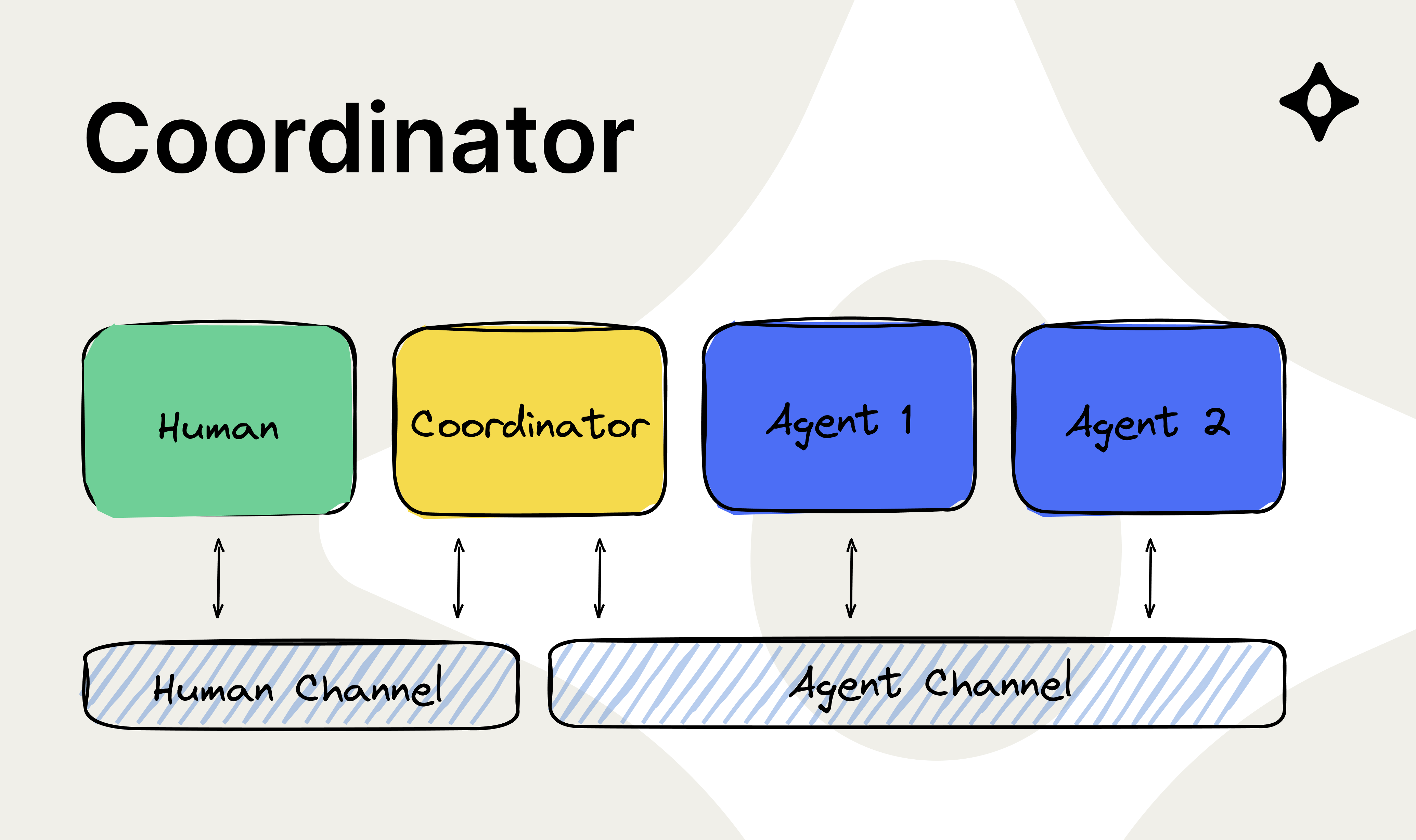
Coordinator Bridge multiple communication channels. Tags: Communication, Pattern |

|
Websocket Gateway Real-time interaction via WebSockets. Tags: Communication, Realtime |

|
DSPy ReAct Agent Advanced Agents with DSPy ReAct. Tags: DSPy, Tool Calling, React |

|
LangChain Agent Integrate tool calling with LangChain. Tags: Tool Calling, LangChain |

|
LiteLLM Agent Power agents with LiteLLM. Tags: LiteLLM |

|
Agent Evaluation & Optimization with DSPy Data-driven development with DSPy. Tags: DSPy, Evaluation, Optimization |

|
Safe Agents with Guardrails AI Guarding LLM agents against toxicity and PII leakage. Tags: DSPy, Guardrails |
|
Triage Agent Triage Agent with classification and routing. Tags: Classification, Routing |

|
Shared Context Maintain shared context across agents. Tags: Communication, Memory |

|
Multi-Agent Conversation Context-aware multi-agent conversations. Tags: Communication, Classification, Routing, Chat |
|
|
Tool Calling Build agents with tool calling capabilities. Tags: Tool Calling, DSPy |
|
|
Agent-to-Agent Protocol Integrate with A2A protocol for standardized agent communication. Tags: A2A, Protocol, Interoperability |
|
|
Model Context Protocol (MCP) Connect EggAI agents with MCP servers. Tags: MCP, Integration |
All examples require the EggAI SDK. Install it via pip:
pip install eggaiEach example is self-contained with its own dependencies and instructions:
# Clone this repository
git clone git@github.com:eggai-tech/eggai-examples.git
cd eggai-examples

# Navigate to any example
cd getting_started

# Create and activate virtual environment
python -m venv .venv
source .venv/bin/activate  # On Windows: .venv\Scripts\activate

# Install dependencies
pip install -r requirements.txt

# Run the example
python main.py
Each example folder contains a detailed README with specific setup and usage instructions.
These examples are designed to be copied and pasted into your own projects. Here's why:
1. Full Ownership and Control By copying code, you have direct access to the implementation. Tweak or rewrite as needed.
2. Separation of Concerns Copying code (rather than installing a dependency) reduces friction if you want to restyle or refactor.
3. Flexibility Not everyone wants a one-size-fits-all library. With copy/paste "recipes," you integrate only what you need.
4. No Hidden Coupling Prepackaged frameworks lock in design decisions. By copying from examples, you choose exactly what gets included.
We welcome contributions! If you have an example you'd like to share:
- Fork this repository
- Create a new example folder with a clear name
- Include a README.md with setup instructions
- Add a requirements.txt file
- Submit a pull request
See CONTRIBUTING.md for more details.
- EggAI SDK - Main SDK repository
- Documentation - Official documentation
- Demo Application - Production-ready multi-agent demo
- Issues - Report bugs or request features
This project is licensed under the MIT License. See the LICENSE.md file for details.