

Fussel is a static photo gallery generator that builds beautiful, mobile-friendly photo galleries from a directory of photos. Once generated, your gallery is a completely static site with no server-side code required.
- 🖼️ Static Site Generation - No server-side code required once generated
- 📷 EXIF Info Panel - View camera, lens, shot settings, and GPS data for each photo
- 👥 People Detection - Automatically creates galleries for people found in XMP face tags
- 🏷️ Face Tag Overlay - Face rectangles displayed over photos in the modal viewer
- 🔍 Zoom & Pan - Pinch/scroll to zoom and drag to pan photos in the viewer
- 🎨 Watermarking - Add watermarks to protect your photos
- 📱 Mobile Friendly - Responsive design that works on all devices
- 🌙 Dark Mode - Automatic dark mode support
- 🔄 EXIF Transpose - Uses EXIF data to automatically rotate photos
- 🔗 Clean URLs - Predictable slug-based URLs for easy sharing
- ⚡ Fast Generation - Parallel processing for quick builds
- ⬇️ Download Control - Optionally allow/prevent original photo downloads
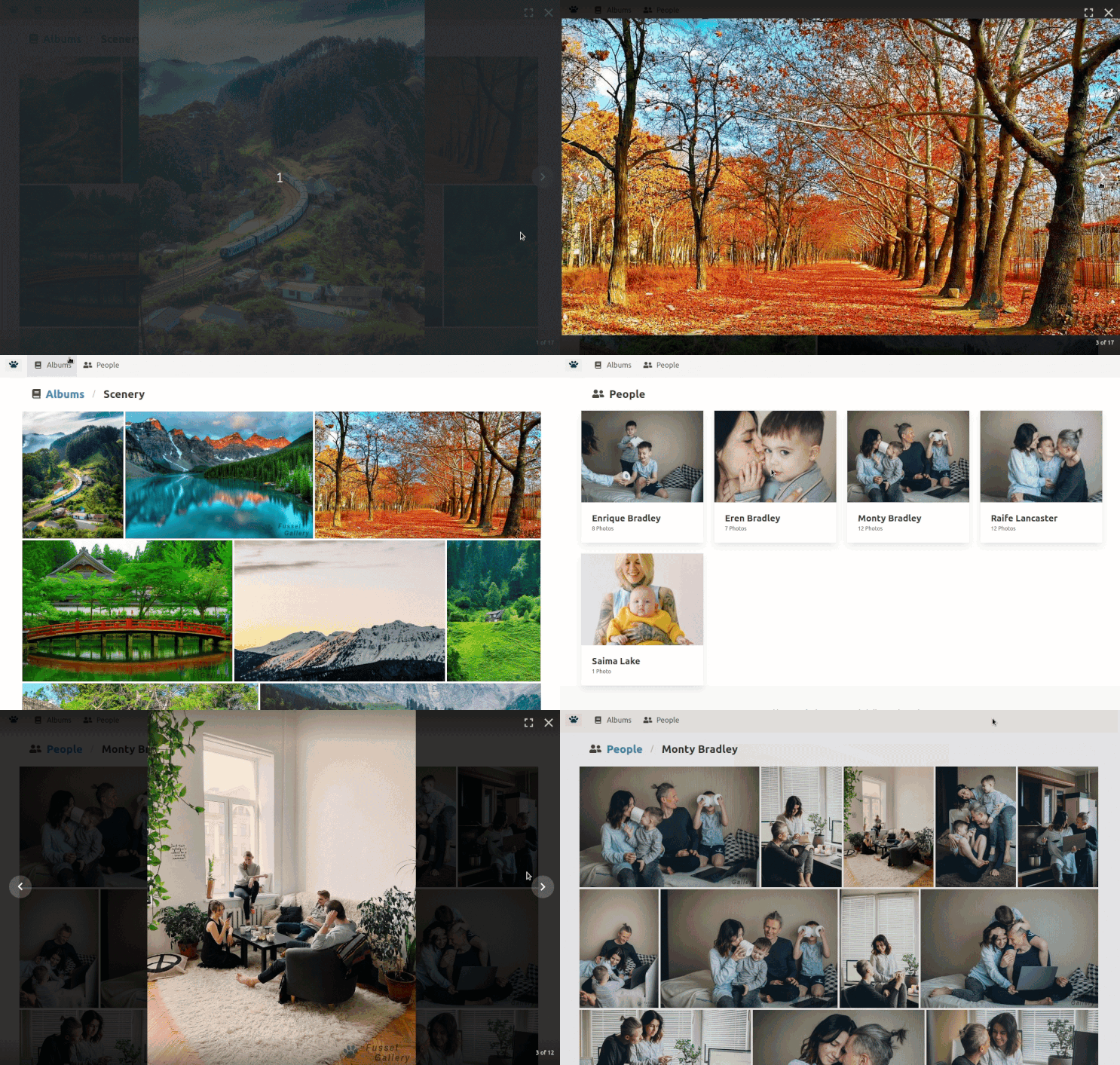
| Albums View | Album View |
|---|---|
 |
 |
| People View | Person View |
|---|---|
 |
 |
Docker is the easiest way to run Fussel without installing any dependencies locally.
-
Set your paths using environment variables:
export INPUT_DIR=/absolute/path/to/your/photos
export OUTPUT_DIR=/absolute/path/to/output
docker-compose up
Or edit
docker-compose.ymldirectly and replace the path placeholders. -
Optional: Customize settings via environment variables or
.envfile:# Example .env file (or export these before running docker-compose) INPUT_DIR=/home/user/photos OUTPUT_DIR=/home/user/gallery-output PUID=1000 # Your user ID (run 'id -u' to find it) PGID=1000 # Your group ID (run 'id -g' to find it) PARALLEL_TASKS=4 FACE_TAG_ENABLE=True WATERMARK_ENABLE=True
-
After generation completes, your gallery will be in the
OUTPUT_DIRyou specified. You can preview it locally or upload it to a web host.
docker run \
  -v <input-dir>:/input:ro \
  -v <output-dir>:/output \
  -e PGID=$(id -g) \
  -e PUID=$(id -u) \
  -e INPUT_PATH="/input" \
  -e OUTPUT_PATH="/output" \
  -e PARALLEL_TASKS="4" \
  ghcr.io/cbenning/fussel:latest
Notes:
- Replace
<input-dir>and<output-dir>with absolute paths to your directories - The
PGIDandPUIDenvironment variables set the output folder permissions to match your user, preventing root-owned files - After the container completes, your generated gallery will be in
<output-dir>
See Docker Configuration below for all available options.
If you prefer not to use Docker or want to develop Fussel, you can install it locally.
- Python 3.10+
- uv - Python package manager (install)
- Node.js v18+ (LTS recommended)
- Yarn 1.22+ (required)
- Make (optional, but recommended for easier setup)
-
Clone the repository:
git clone https://github.com/cbenning/fussel.git cd fussel -
Install dependencies:
make install
-
Configure Fussel:
cp sample_config.yml config.yml
Edit
config.ymland set at minimum:gallery.input_path- Path to your photos directorygallery.output_path- Where to generate the site (default:site/)
-
Generate your gallery:
make generate
-
Preview your site:
make serve
Then visit
http://localhost:8000in your browser.
Your photo directory structure determines your album structure. Each subfolder becomes an album. This section explains how to organize your photos before generating your gallery.
Point gallery.input_path to a directory containing subfolders, where each subfolder name becomes an album name:
/home/user/Photos/gallery/
├── Album 1/
│   ├── photo1.jpg
│   └── photo2.jpg
├── Album 2/
│   ├── Sub Album 1/
│   │   └── photo3.jpg
│   └── photo4.jpg
└── Album 3/
    └── Sub Album 2/
        └── photo5.jpg
Fussel supports common image formats:
- JPEG (
.jpg,.jpeg) - PNG (
.png) - GIF (
.gif)
The config.yml file (or Docker environment variables) controls all aspects of gallery generation.
gallery:
  input_path: "/path/to/photos"      # Required: Your photos directory
  output_path: "site/"               # Where to generate the site
  overwrite: False                   # Force rebuild all photos
  parallel_tasks: 4                  # Parallel processing workers
  exif_transpose: False              # Use EXIF rotation data
allow_download: True # Allow downloading original photosgallery:
albums:
enable: True # Show Albums navigation button
recursive: True # Process subfolders as albums
recursive_name_pattern: "{parent_album} > {album}" # Sub-album naminggallery:
photos:
enable: True # Show Photos navigation button (all photos view)
sort_by: "date" # Default sort: 'date' or 'filename'
sort_order: "desc" # Default order: 'asc' or 'desc'gallery:
people:
enable: True # Enable face detection from XMP tagsgallery:
watermark:
enable: True # Enable watermarks
path: "web/src/images/fussel-watermark.png" # Watermark image
size_ratio: 0.3 # Watermark size (0.0-1.0)site:
http_root: "/" # URL root (include trailing slash)
title: "Fussel Gallery" # Browser tab titleThis section provides detailed information about Docker configuration options. For a quick start, see the Docker Quick Start section above.
See docker/template_config.yml for all available configuration options. Key variables:
INPUT_PATH- Path to input photos (inside container)OUTPUT_PATH- Path to output directory (inside container)PARALLEL_TASKS- Number of parallel workers (default: 1)OVERWRITE- Force rebuild of all photos (default: False)EXIF_TRANSPOSE- Use EXIF data for rotation (default: False)ALLOW_DOWNLOAD- Allow downloading original photos (default: True)FACE_TAG_ENABLE- Enable face detection (default: True)WATERMARK_ENABLE- Enable watermarks (default: True)SITE_TITLE- Gallery title (default: "Fussel Gallery")SITE_ROOT- HTTP root path (default: "/")
For advanced users who want to customize all options:
docker run \
  -v <input-dir>:/input:ro \
  -v <output-dir>:/output \
  -e PGID=$(id -g) \
  -e PUID=$(id -u) \
  -e INPUT_PATH="/input" \
  -e OUTPUT_PATH="/output" \
  -e PARALLEL_TASKS="4" \
  -e OVERWRITE="False" \
  -e EXIF_TRANSPOSE="False" \
  -e ALLOW_DOWNLOAD="True" \
  -e RECURSIVE="True" \
  -e RECURSIVE_NAME_PATTERN="{parent_album} > {album}" \
  -e FACE_TAG_ENABLE="True" \
  -e WATERMARK_ENABLE="True" \
  -e WATERMARK_PATH="web/src/images/fussel-watermark.png" \
  -e WATERMARK_SIZE_RATIO="0.3" \
  -e SITE_ROOT="/" \
  -e SITE_TITLE="Fussel Gallery" \
ghcr.io/cbenning/fussel:latestOnce generated, your gallery is a static site. You can host it anywhere:
-
Upload to any web host - Copy the contents of
gallery.output_pathto your web server's document root -
Use GitHub Pages - Push the output directory to a GitHub repository and enable Pages
-
Use a CDN - Upload to services like Netlify, Vercel, or Cloudflare Pages
-
Local preview - Use
make serveor Python's built-in server:make serve
Or manually:
python -m http.server --directory <output_path>
Run the web app in development/watch mode with hot reload:
make devOr manually:
cd fussel/web && yarn startmake testThis runs:
- Python tests via pytest with coverage (output in
htmlcov/) - JavaScript tests via Vitest (
cd fussel/web && yarn test)
make fmt     # Auto-format Python with ruff
make lint # Check Python formatting without changesfussel/
├── fussel/ # Main Python package
│ ├── generator/ # Gallery generation logic
│ └── web/ # Vite/React frontend
│ ├── src/
│ │ └── component/ # React components + tests
│ └── vite.config.js
├── tests/ # Python test suite
├── docker/ # Docker configuration
├── config.yml # Your configuration (not in git)
└── sample_config.yml # Configuration template
v3 introduces new features and updated tooling. The steps below cover everything you need to do after pulling v3.
v3 uses uv instead of pip. Install it, then:
make installIf you previously had a venv/ or .venv/, remove it first — uv manages its own .venv.
The build toolchain has changed from react-scripts (Create React App) to Vite. A fresh install is required:
cd fussel/web
rm -rf node_modules
yarn installSeveral new configuration keys are available in v3. Add any you want to use — all are optional and have sensible defaults:
gallery:
  allow_download: True       # NEW: allow/prevent original photo downloads

  albums:
    enable: True             # NEW: show/hide Albums navigation button

  photos:                    # NEW section: all-photos view
    enable: True
    sort_by: "date"
    sort_order: "desc"
Copy from sample_config.yml for the full reference.
make generateYour existing output_path will be updated in-place.
| Area | v2 | v3 |
|---|---|---|
| Python package manager | pip / requirements.txt | uv / pyproject.toml |
| JS build tool | react-scripts (CRA) | Vite |
| JS test runner | Jest | Vitest |
massedit dependency |
required | removed |
| Python version | 3.8+ | 3.9+ |
If installed via make install:
git pull
make install
If using Docker:
docker pull ghcr.io/cbenning/fussel:latestThe gallery uses a React-based frontend built with Vite. You can modify styles and components in fussel/web/src/ and rebuild with make generate or cd fussel/web && yarn build.
No. Fussel only reads from your input directory and writes to your output directory. Your original photos are never modified.
When viewing a photo in the modal, click the ⓘ button in the toolbar to open the info panel. It displays camera make/model, lens, shot settings (exposure, aperture, ISO, focal length), and GPS coordinates if present in the photo's EXIF data.
EXIF data must be embedded in the photo file. Some tools strip EXIF on export (e.g. certain social media downloads, some editors). Photos taken with a smartphone or dedicated camera typically have full EXIF data.
This project is licensed under the MIT License - see the LICENSE file for details.
Contributions are welcome! Please feel free to submit a Pull Request.